
Françoise Monnin, “Monumental Ipoustéguy”
“Heavy stuff” is often the colloquial expression that springs to mind when Ipoustéguy is mentioned. Indeed, the monuments created by this master—from the United States to Japan, and particularly in Germany and France—are striking first and foremost for their ambitious dimensions (sometimes 20 meters) and for the power of the figures depicted.
In the aftermath of the Second World War, Ipoustéguy developed a passion for the assembly of geometric modules, then for the surrealism of situations imagined by the unconscious, and for the hyperrealism of body representation. Embodying the essence of postmodern society, he represents humanity on the move: courageous, even rebellious, strong and free, always emblematic, never anecdotal. The tribe of rebuilders, immortalized in this way, surmounts the walls, resists the waves, and defies gravity.
A self-taught artist, Ipoustéguy possessed unparalleled energy as he mastered the techniques of modeling in cement, plaster, or clay, cutting steel, casting bronze, and carving marble. Over the course of half a century, he created several hundred sculptures, often in spectacular formats. From Christ à Mac Gee (his first monumental work in 1950) to L’Âge de la résolution in 1999, the 15 sculptures presented here retrace the career of one of the most important French sculptors of the late 20th century. He is undoubtedly the most astonishing in the field of figuration.
Some of these works are now famous, such as La Terre, exhibited at Documenta in Kassel in 1964, or Val de Grâce, commissioned by the French Ministry of Defense in 1977. But many other spectacular creations remain little-known: La Naissance (1968), so intense; Maison (1976), so raw; Scène comique de la vie moderne(1976), whose expressionism stupefies. The format of such creations may be human-sized, but they are nonetheless colossal—so intimidating are their theme, density, and intensity.
Equally astonishing are Ipoustéguy’s numerous published writings, which remain confidential to this day, and the large-scale canvases he produced between 1966 and 1968 in the Paris studio made available by Galerie Claude Bernard. Between commissions for monuments, Ipoustéguy returned to drawing, his initial training, embraced color, and celebrated matter. Ten compositions evoking anatomy, pleasure, life, or death reveal here an unprecedented aspect of the polymorphous work of this profoundly original artist.
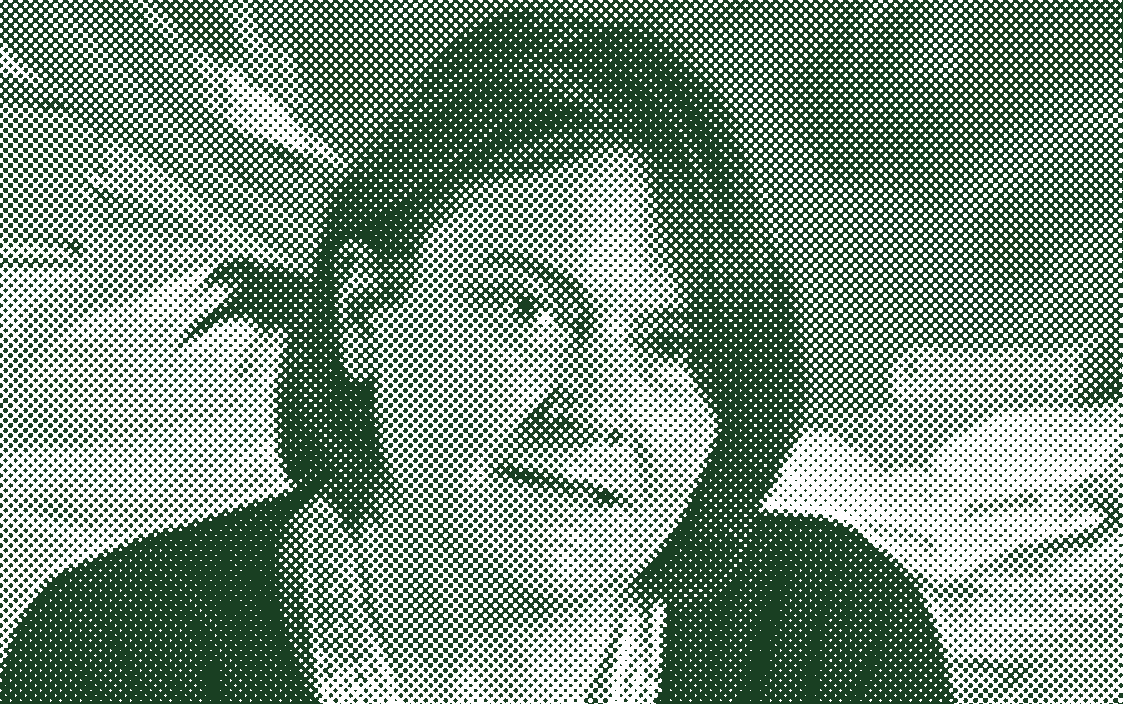
Françoise Monnin
Art historian. Editor-in-chief of Artension magazine.
Author of Ipoustéguy sculpteur (Serge Domini editions / Conseil général de la Meuse, 2003)
and Ipoustéguy peintre, Chirurgie (La Différence editions, 2006).
2020, text for the Centenary of the sculptor’s birth
Ipoustéguy’s Choisy
“Here, I’ve known Paradise. Now I’m on the road to Purgatory. While waiting, who knows, for Hell.” On this day in 2003, as he closes the door of 35 rue Chevreul in Choisy-le-Roi for the last time, Jean Robert Ipoustéguy concludes with his customary humor the fifty-six years he spent in this vast home. Hidden from view behind a high brick wall and a large metal gate, he created hundreds of sculptures—and thousands of drawings.
In 1947, winner of the First Prize for Drawing at the Concours Général and determined to stop making socks—his first profession—he worked with his evening class teacher in Paris, Robert Lesbounit, on the frescoes and stained-glass windows of the church in Montrouge. It was then that he learned about the house of the ceramist Lenoble in Choisy. The widow of this artist willingly lent the adjoining workshops to him and his friends, disused since her husband’s death in 1939. To earn a living, Ipoustéguy gave drawing lessons in Issy-les-Moulineaux. As soon as the lessons were over, he headed to Choisy, where he mixed clay, plaster, and cement. He also made cardboard and metal assemblies. “Sculpture? A folly,” said the famous gallery owner Kahnweiler, who recommended drawing instead. But at Choisy, the space was waiting to be filled. Works were born. Soon, exhibitions followed one after another.
In the early 1960s, signing a contract with the Claude Bernard gallery, the sculptor stopped teaching and took over not only the Choisy studios, gradually abandoned by his friends, but also the vast house he purchased. Upstairs, he drew; on the ground floor, he stored his sculptures. The place was very large. The artist welcomed new friends, who stayed for days, months, or even years. During the day, everyone went about their business. In the evenings, the long hours around the cement tables in the garden, the pond ideal for bathing, and the swings delighted the children. Many young intellectuals dreaming of a new world—among them the future philosopher André Glucksmann, the future filmmaker Jacques Kébadian, and the future minister Bernard Kouchner—organized meetings, drafted tracts, and stocked newspapers such as “La cause du peuple.”
A fervent democrat, Ipoustéguy never engaged in party politics. “I’ve never had a card for anything in my life. Not even a fishing club card!” It was through sculpting that he became an activist, creating both a Christ (1950) in Choisy in homage to Willie McGee—a Black American executed by electric chair—and a monument to the memory of Pierre Overney, a young activist killed by a Renault security guard in Boulogne-Billancourt (La Mort du frère, 1972).
The years passed, punctuated by visits to Carrara to carve marble and trips abroad for major solo exhibitions—Copenhagen, Rome, New York, Berlin. Ipoustéguy always returned to Choisy with joy. As soon as a work was sold, the money was used to cast another in bronze.
Small formats filled the house; large ones, the garden. Through a window, one could see La Femme au bain (1966). Near the gate stood Val de Grâce (1977), an exceptional masterpiece that its commissioner, the Ministry of the Armed Forces, refused for years, deeming it too strangely modern. Amidst all these figures emerging from the greenery, the artist continued inventing new ones, sometimes pausing to draw or write a few pages of autobiographical and surrealist novels. Increasingly solitary, he received few visitors from the 1980s onward, preferring to devote all his energy to inventing forms and phrases.
In 2003, Ipoustéguy turned eighty-three. Famous from Australia to the United States, but neglected in France, he declined an invitation from the members of the Académie des Beaux-Arts. To wear a green habit to feel immortal? He did not need that. His works exist and will long outlive him.
Having spotted a farm for sale in Lorraine, a few hundred meters from his birthplace—his parents, a carpenter and hairdresser, had left the Meuse in 1930 for lack of work and moved to the Paris suburbs in 1937—he bought the building, to the great pride of the villagers. Eight huge trucks handled the move. Ipoustéguy oversaw every trip. He organized all his works, put his archives in order, and donated some sculptures to museums. Farewell, 35 rue Chevreul. From now on, only a few rolls of film preserve its memory. In 2006, while writing a new book and painting watercolors, Ipoustéguy died in Dun-sur-Meuse, where he was born in 1920. However, it was in Choisy-le-Roi that he truly lived.
Françoise Monnin, Ipoustéguy’s Choisy,
Extract from the catalogue, Le 35 rue Chevreul, May 2010