
Michel Troche, “Impregnable Ipoustéguy”
“In the work, here, there is no pretension of knowledge, or of exact analysis… other than that of having seen you and restoring the unknown, the enigma, within your knowledge.”
I like Ipoustéguy’s reflection. It seems to me exceptionally kind to himself, to his work, and to art. It excludes no one, and no concept, from the task at hand. Like an alchemist—but of the Ars Magna—or a night watchman, Ipoustéguy restores what is perpetually stolen; he does not offer an unusual or grandiloquent treasure from somewhere other than ourselves. What brilliant accessory, what trick, what “picturesque” detail could attempt to compete miserably with that incredible presence? And where, if not within our own knowledge, could we find the lost object, the unknown, the enigma, the continuing attraction that we rob from our own desire?
“There is no recipe for embellishing nature; the only thing that matters is seeing,” declared Rodin.
In contrast to a hysterical conception of the artist’s role—which invariably postulates noble enrichment, the “extra,” the Romantic supplement—it may seem unusual to simply invite us to see and conquer what is. But doesn’t what is contain the movement of its own transgression? Perhaps in the sense Heraclitus meant when he said, “The logos of the soul increases itself.” Doesn’t the return to the unknown, to the enigma, put us back on track in the movement that is ours, stronger than any strangeness? Invention is a call to order, not a privilege or a state of exception.
Thus, it is not to diminish the artist, but rather to break down his artificial distance—the exotic affectation of his appearances—to love in him this mandate, and not his fidelity to a composed role. In the best of cases, he is the one who brings us back to all our potentialities. And this totality runs the risk of being incomplete if it privileges a “correct analysis” or a “pretension of knowledge.”
I wonder whether Ipoustéguy preferred sculpture because of its impulse towards essential proximity, its living analogy, and the human fraternity it immediately establishes in space—a fraternity he seeks to grasp through excavation and tactility within his works. I wonder if its admirable, surprising power—apart from the obvious technical mastery it displays—is not due first and foremost to the obstinate maintenance of this relationship: both through loving identification and, to assert itself even more ardently, through the slightest dissimilarity.
More than an avant-garde sculptor, Ipoustéguy is an independent sculptor.
From the outset, painting places us in the convention of its surface. Before we begin, it is already something other than our common vision. “The reality of painting is the canvas,” said Giacometti. Sculpture, on the other hand, could very well be in competition with us. In preference to images, and for a long time, it has aroused religious adoration or prohibition. Its truth is all the more dangerous, and continues to be so. Ipoustéguy’s two sculptures, La Mort du frère (Death of the Brother) and Val-de-Grâce—which were provisionally rejected—remind us of the vitality of art in general, and sculpture in particular. They show us that, despite apparent intellectual and economic modernization, this vitality has not ceased to provoke moral and institutional dread.
It seems that here, in every sense of the word, “love of one’s fellow man” is not recognized. Yet Ipoustéguy’s initiative is not primarily political; it is spiritual. But its consequences are infinite. We think we are rejecting it when, in fact, we are excluding ourselves. The fairy-tale magician lifts the roofs, opens the doors, draws the curtains, and what does he find? Not necessarily everyone at work, or even at the family dinner table. And yet everyone knows everything, or, as if by magic, remembers nothing.
Like other artists, Ipoustéguy is that practical magician who, by dint of rediscovering us, going back to our being and origins, no longer makes our oblivion bearable. He invites us to be ourselves, or, for some, makes the loss of oblivion intolerable. Forgetting death, forgetting love, forgetting politics. In short, Ipoustéguy is guilty of ontological indiscretion—an indiscretion more unforgivable and less spectacular than any immorality.
Even myth—the persistent use of myth—which could be reduced to a mere literary reference, is for Ipoustéguy the opposite of a pedantic distancing. It is the most concrete reference to our original and still-possible aptitude. Art is a regression that disrupts the present, just as the shaman or sorcerer used to reactualize primordial energy by living and reciting the story of beginnings.
It is an energy sustained by death that no one would dare claim as alien to ourselves. If it were a question of morbidity, life in this respect would be infinitely more complacent than the most indulgent of artists. Whereas here, it is the most direct love, the most immediate loving identity, that chooses sculpture out of a desire for survival or a fear of degradation. “Consider then what is most essential to man, his name or his image? The name changes according to the country; the form is not changed, except by death,” noted Leonardo da Vinci.
And on such an essential journey, how can we dissociate death, love, and politics, all three of which, as we know, are subject to close ideological surveillance? And how can an artist dispense with associating his view of death and his view of love with the conditions under which they are conditioned by power? We cannot separate the return to the unknown, the enigma, and the resumption of essential invention—whether individual or collective—from the knowledge of the obstacle.
If it were simply a question of fighting against habit, the wear and tear of words, or the dulling of vision in order to rediscover something intact after refurbishment—something beyond ourselves and beyond any historical reach—artistic activity would hardly meet with hostility. It would enjoy almost general approval and even incessant encouragement from public authorities. The fact that this is not always the case tells us that art runs up against something more fundamental. Disapproval begins when, thanks to the most rigorous yet relative approach, we go back to all the original powers to reach the hidden power—unconsciously and deliberately hidden by our submission, our consent to the imperatives of all hierarchies, whether social or ideological.
In art, too, the learning from childhood of a freely consented resignation conditions the domination of a few. The “ideology of the unattainable” is the superlative correspondent of this organized humiliation. But it is also an element of the knowledge that we embark upon with Ipoustéguy, in which we try, with him and thanks to his extraordinary poetic logic, to set aside all judgment, to approach what is, and to rediscover, at last, our own generosity.
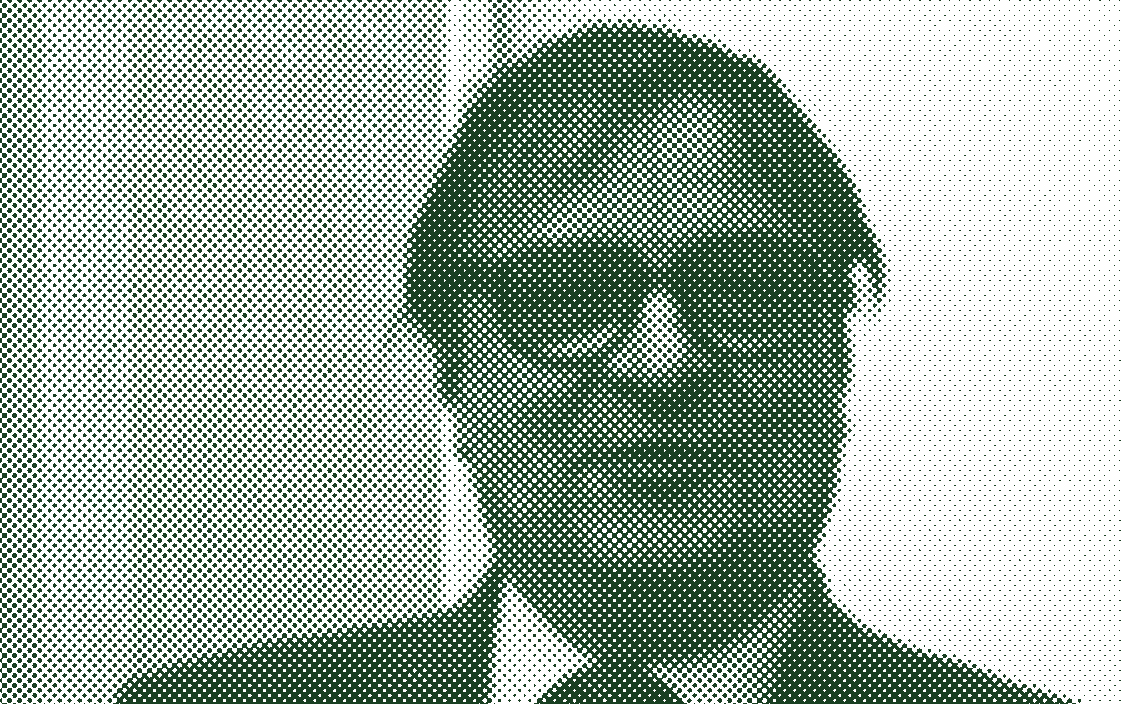
Michel Troche
Inspector General of Fine Arts
Extract from the catalog of the Fondation Nationale des Arts Graphiques et Plastiques, 1978