
Dieter Ruckhaberle
The same experience that moves us when we read Joyce’s Ulysses—that is exactly what it is—or Robert Musil’s The Man Without Qualities, is what moves us when we encounter Ipoustéguy’s work. It is not for everyone. Not everyone was touched to the heart by La Terre and Homme, presented at the third Documenta in Kassel. The deep emotion emanating from a work of art—which first spreads through the ganglia of art appreciators, and often only reaches the wider public after years or decades, perhaps only after the artist’s death when the hatred of the small-minded fades into the nil nisi bene [say nothing but good of the dead]—this deep emotion is rare. Ecbatane, here in Berlin on the forecourt of the International Congress Centre, is a great victory.
The discovery and understanding of reality cannot be achieved without tools: telescopes, microscopes, crutches, wheelchairs, stairs, corners, front doors, cellars, or lamps. Philosophy, art, literature, music, and artistically produced experiences—even certain kinds of circus, movement, and silence—all change our consciousness. This happens first in a few individuals who, like drug addicts, hasten to communicate the often mutilated remains of their own experiences.
Yet it is the artist’s duty to insist on unaltered truth. (It is the duty of publishers, exhibition organizers, and concert agents to force reactionaries, who seem to fear nothing so much as a new discovery, to make this communication possible.) The precision that directs Jean Ipoustéguy in his work, leading him to calculate well in advance the problems that will arise at the completion of the piece, is the same precision he applies to what we commonly call everyday life. A modest man, he lives in his studio in a Paris suburb, always hiding his genius beneath his person. Whether joking, making a kind gesture, sitting at the table, or pouring a glass, he remains an exact companion and thinker—a precise man, a complex man, but always simple.
Goodness and hardness; a love for everyone and everything; fresh and resolute reason. Here he is, able to carve an idea out of a block of white marble: under a blanket, two people, making love, asleep: Erose en sommeil. “Erose” is a play on words by Ipoustéguy: the Greek god Eros turned into a woman, with a whiff of—to pronounce it is already too much—sex. Hands clasped. We searched long and hard for the translation “Schlafende Liebe” (Sleeping Love), and finally found it with the help of Beethoven’s Opus 110.
Now the Berliners and their guests will receive Alexandre devant Ecbatane on the forecourt of their Congress Center. The jury has made up its mind, as has the Senator for Public Buildings, and the Berlin artists associated in the Professional Artists’ Association, who stood shoulder to shoulder with their French colleague during the most heated phase of the public discussions. How will the citizens of this city and their guests decide? They are going to receive a statue of a god in their city—a pagan god at that. It is a sculpture that thematizes man and power, not just Alexander in front of Ecbatane. The city was about to change. It has imposed upon itself a claim to spirit. Doesn’t that count for something? Instead of a mere setting for a building, a claim to knowledge? Not a one-way street, and without over-simplified explanations. Rather, relationships of forms that simultaneously create “man in his city.” These are our power and our failure with regard to things.
If it is the quality of an act in history to have discovered the “use-value” of things (Gebrauchswert), as one of Berlin’s illustrious students of another time put it—a man after whom a main street in Neukölln is named—and if progress consists in discovering new problems, posing them, and solving them, then there is a historical act in the work of those who seek out and retain new knowledge, feelings, spatial experiences, and auditory and visual qualities. Every new discovery about man and his surroundings contributes to this progress. So what is an artist’s productivity? What if his name is Ipoustéguy? It is up to you to find the answer.
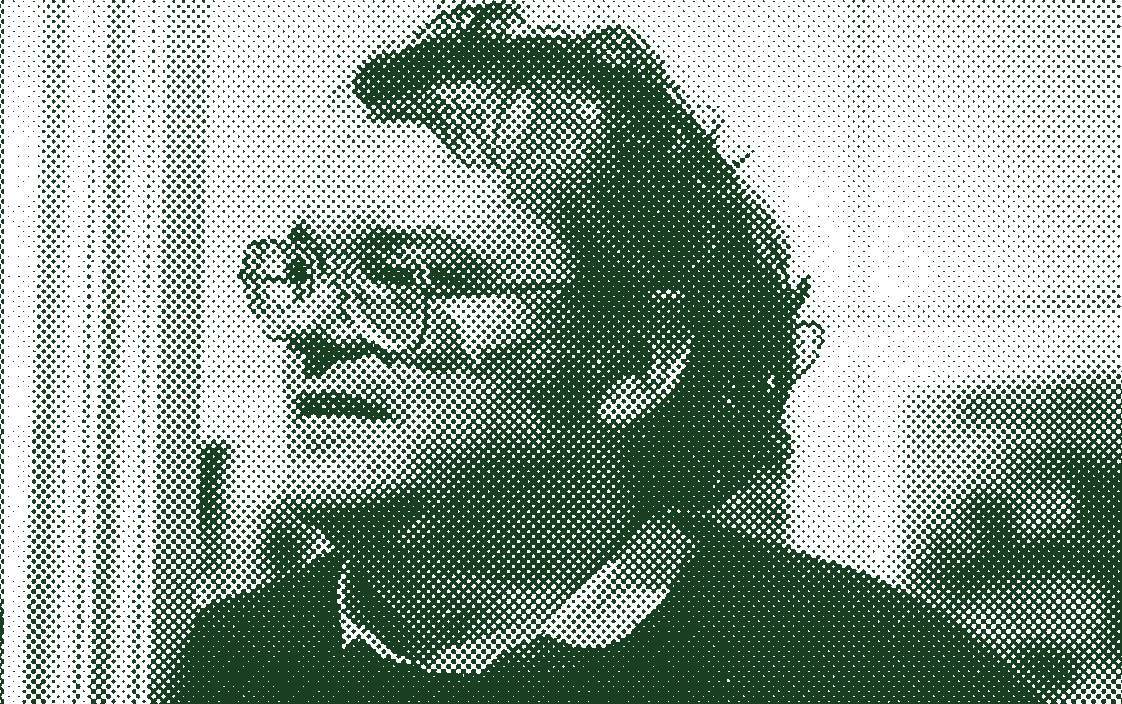
Dieter Ruckhaberle
Director, Kunsthalle Berlin
Extract from the preface to the 1979 retrospective catalog, Le Cercle d’Art