
Évelyne Artaud
EVELYNE ARTAUD: Allow me to follow this line which, in sculpture, becomes a bundle of lines, developing a plurality of viewpoints that sets us in motion—but also, of course, calls us into question: hence the coiling of the question mark. The effect of this line winding through space is a deployment of energy. This conception of volume, of sculpture as an opening onto a multiplicity of viewpoints, brings me back to your formulation: “Never the straight line, always at the edge of the straight line.” Is this to be understood as an ever-possible opening onto the virtual—onto that which does not yet exist but must not be returned to nothingness because it must remain a perpetual possibility? Could this be the secret of your astonishing energy, your perpetual invention, your youth?
IPOUSTÉGUY: Youth? It is at this moment (O time, suspend your flight!) that it is best for me to remain silent.
ARTAUD: Come now. This secret: does it lie where you speak of an underlying logic? An almost irrational logic that acts in spite of you, as if without your knowledge, in and through the work? Does it reveal itself to you now as a kind of immutable background of truth or primary identity—a sort of blueprint that already contained all the developments of the work, like a form of prescient information?
IPOUSTÉGUY: So as not to beat about the bush, as is my habit, I will try to adjust to the order of your questions. I would like to move on to the concept of a volume enclosed in a bundle of lines, which places the creator in the position of the first person affected. He sees; he sees himself. But then, what comes next! That is where your question mark lies. The enraged author, engaged in a never-ending monologue—in fact, an inner dialogue—suddenly sees the subject of his discourse approaching others, approaching you…
ARTAUD: Our destiny remains that of communication, and the work is destined for others.
IPOUSTÉGUY: Inevitably. But at what time will it reach him? Your voice will reach him here… somewhere… there… one day… unless your voice wanders until it goes unanswered.
ARTAUD: Must there ultimately be a conclusion?
IPOUSTÉGUY: Forcing one out (like a delivery by forceps) is often a matter of behavioral technique. Everyone has their own. Either a vigorous affirmation precipitates it, or the virtue of patience allows you to bypass obstacles. Just like skill, or naivety for that matter. I have always been blown away by the aplomb of Christ who, when asked by Caiaphas about his divine filiation, replies: “You have said so.” I find that hot, peremptory, and beneath his apparent impassivity, tantamount to thunderous, Homeric, Rabelaisian laughter. All of a sudden, he took the position of Messiah and made it his own by turning the question on its head. It is a mark of the popular spirit found in Joan the Spark… pardon me, Joan of Arc.
ARTAUD: Do you revel in these situations? So you like the word that dictates—isn’t that a form of terrorism?
IPOUSTÉGUY: Who dictates? The dictator? I don’t quite understand. Terrorism only begins with a gun in your hand, aimed at others. The responsibility lies with ourselves, not elsewhere, not with others. We simply must not involve ourselves with what is inherently troublesome. We have been warned, since we ride on the word of our Bibles, our testaments. I like the old prophets because of their dark predictions: they always work… I like the new prophets because of their predictions of happiness: they never work. I have undergone the kneading of teachings that determined my ethics, which are as official as they are scholastic. But until a powerful thinker has the revelation to depose Bernard Palissy—the exemplary craftsman of my school books—in favor of another Bernard, [Bernard] Tapie for example, I will refrain from demanding the precedence of my work over that of others. They like me, they don’t like me… I am not running for office.
ARTAUD: Isn’t this a paradoxical statement for a sculptor who has worked extensively in public spaces, creating a large number of monumental sculptures?
IPOUSTÉGUY: “Contradictions,” “living contradictions”—I remember writing these words in the catalog for my first exhibition at Galerie Claude Bernard in 1962. Just think: I, the introvert, went on to exalt myself in extroversion with large-scale sculptures. This exploitation of non-confidential space was for me the material possibility of survival. In this way, society provided me with the possibility of either staying in my burrow or stepping onto the stage. I should point out that nobody forces me to isolate myself.
ARTAUD: Yet you do.
IPOUSTÉGUY: Why do you do it? That’s anyone’s guess. A friend told me that I don’t want to betray my father, who always remained poor and discreet. Or is it a question of genes? His name was Eugène…
ARTAUD: I see you like to play with words.
IPOUSTÉGUY: It is not a game. It is more nagging than that. It is a sort of itch, a chronic itch, a rheumatism as old as time… Joachim du Bellay, in his sonnet to Diane de Poitiers, already sings: “De votre Dianet (De vostre nom j’appelle / Vostre maison d’Anet) la belle architecture…” But I am drifting. Getting back to my “defections,” I have long wondered whether they were due to my lack of higher education. As you know, I didn’t learn sculpture at school. It wasn’t until 1950 that I started, by trial and error, thanks to the fortuitous availability of a space: this garden where we sit now. In my late teens, however, I took lessons from an extraordinary drawing teacher at the City of Paris evening classes. You will tell me that a good student always has a good teacher. But I insist: this one, Robert Lesbounit, was extraordinary. He told me Donatello’s answer to one of his pupils who was wondering about the secret of sculpture: “Draw… draw…” And he passed me a little book by Alain, Entretiens chez le sculpteur. How beautiful it was! Do you know what conclusion I drew from it?
ARTAUD: No, tell me.
IPOUSTÉGUY: That in drawing, one line was enough. But which one? Much later, I wanted to use sculpture to make that line resonate in all directions, to infinity. However, as I had decided to flirt with a particular mark—the almost straight line—it was this kind of path that revealed me. I must say that today, the straight line, on a large scale, stems less from an intellectual requirement than from an agreement between profitability and investment. The pressure of economics on urban aesthetics cannot be overstated. Architects know all about it… In fact, we fall like flies into a glass of milk, whirring our wings in the nourishing yet deadly liquid of cost-efficiency. Naturally, in my monumental works, I have taken this into account out of a need to occupy the largest possible space at the lowest possible cost. But as soon as the cost of less extensive works became less of a constraint, I escaped the strict straight line by using strips.
ARTAUD: Drawing has the great advantage of freeing you from this economic pressure.
IPOUSTÉGUY: This is why it allows the most revealing trace of myself, a trace that emerges as if surprised to arise from nothingness, at the tiniest possible distance from the virtual. It is a miracle of expression that we see in the embryonic stage in the child, whose slightest movement of tiny hands signals its belonging to life and marks the first manifestation of its internal schema. But this is not yet the prescience to which you allude. It involves too much accumulation and complexity of experience to justify any abstraction in the name of childishness, or at best, innocence. That is why I don’t equate children’s drawings with the drawings of those who have mastered their expression.
ARTAUD: Is the artist comparable to a man of science, whose art has given him access to a certain form of knowledge?
IPOUSTÉGUY: Of course. Ever since we were born, our bodies have received and continue to receive information in tidal waves and floods; day by day, we push back the limits of our subconscious, which is infinite compared to the content of electronic machines. Our inadequacies in relation to them are only revealed by our difficulty in accessing our data banks. The gift of creation lies in the successful capture of this sovereign information.
ARTAUD: Sovereign and underground…
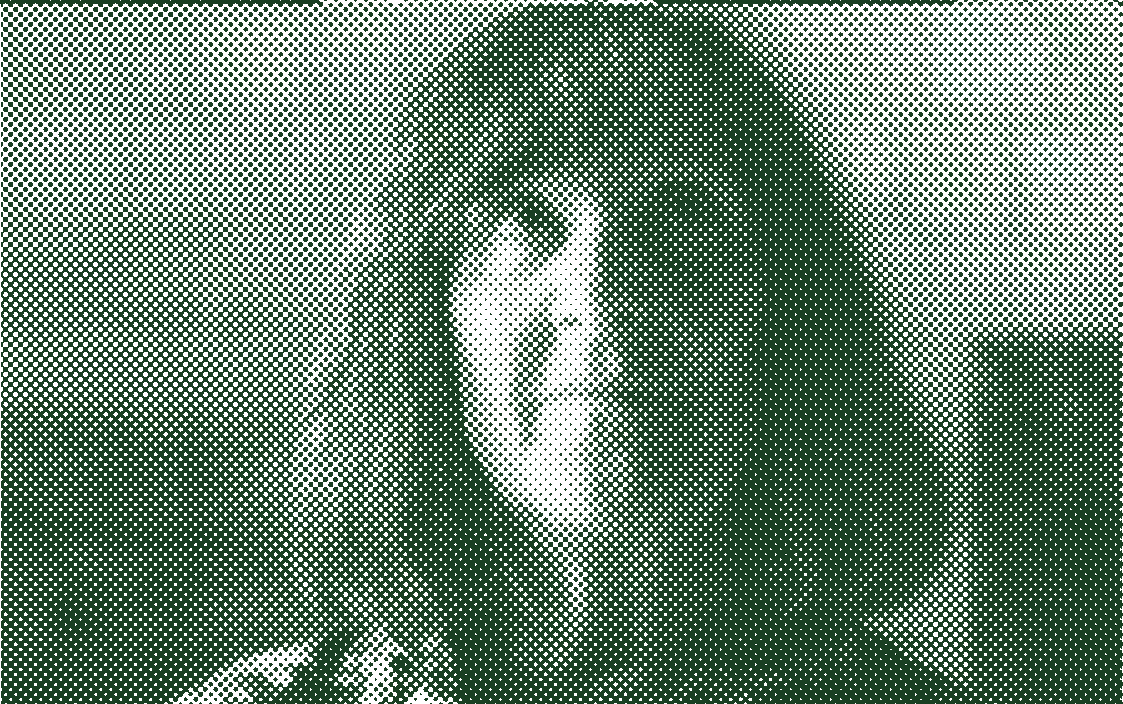
Évelyne Artaud
Art critic and curator
Excerpt from the interview book Ipoustéguy, parlons…, Diagonales Editions, 1993
See her portrait: https://www.youtube.com/watch?v=_3YG5dosJ1A