
Raymond Mason
Jean Ipoustéguy died on Wednesday, February 8, 2006, aged 86. With him, a whole chapter closed in the fiercely solitary endeavor that was the life of a sculptor. I knew him well, and I want to pay tribute to him. It is a personal desire; he did not need it. His career was marked by years of great celebrity, and he was awarded the Grand Prix National des Arts Plastiques.
As a sculptor myself, in 1963 I joined the Galerie Claude Bernard in Paris (in the 6th arrondissement), which was exceptionally devoted exclusively to sculpture and the works on paper associated with it. There, I found three sculptors a little older than me, all in their mid-forties: two Frenchmen, César and Ipoustéguy, and Roël d’Haese, a Belgian. They had only been exhibiting there for a short time—the gallery was very young—but they were already well known.
We formed a quartet. César left the gallery after ten years because Claude Bernard refused to exhibit his resin works. Roël d’Haese, an artist of rare quality who cast his own bronze and also worked in gold and silver in the great Flemish tradition, died a few years ago—as, of course, did César. Ipoustéguy and I stayed together for some twenty years. Now I am the only survivor, which gives me another reason for writing this.
The two stars of the gallery, even when it expanded to include a dozen other artists, were unquestionably César and Ipoustéguy. César, who soon became famous, was the best known to the public; but for us at the gallery, the taciturn Ipoustéguy was in no way overshadowed by the voluble Marseillais. (I must note, however, that for the artists, César was a loyal and generous friend; several of us were present in the gallery thanks to his recommendations to Claude Bernard). Ah, one other thing: the two men were quite short, but they had Rosine and Françoise as their wives—both tall and beautiful.
At that time (1963), Ipoustéguy’s sculptures were of ample proportions and almost geometrical, yet with noble surfaces and seductively rounded edges. Formed in plaster, they were translated into bronze and given a black patina. I admired this style greatly—to the point of having my own two large bronzes, La Foule, also given a black patina. This was much to the despair of my foundryman in Rome, and, a few years later, to my own despair, because my hundred figures, deadened by this radical treatment, looked like a pile of coal. I am speaking here of the sculpture that was the highlight of my first exhibition at Claude’s in 1965. It also marked the first time I brought a resolutely figurative work to the gallery.
In fact, Ipoustéguy’s sculpture had already emerged from his recent abstraction with two simple figures. First, the woman (La Terre, 1962), and the following year, Homme (Man). Tall, very straight, standing.
But where I was bringing life from the outside world into the gallery, these two works by “Ipous” were solitary. With Homme, we see the influence of archaic Greek sculpture, which Ipoustéguy had just seen in Athens. In any case, it was his first work to cause a sensation. I was in the company of Marie-Laure de Noailles, who was delighted to see it. (It was the heroic age of the gallery. An exhibition by César or Ipoustéguy would bring in so many people that the police would close off both ends of the Rue des Beaux-Arts, creating space to contain the crowd until they could enter the gallery, which was blocked by two employees).
Underpinning his mastery of the human body was his great gift for drawing. Over the years, I came to appreciate him to the point of considering Ipoustéguy one of the major draftsmen of his time. When Sam Szafran, an astute collector, showed me Ipoustéguy’s nude drawings from his student days, they already revealed forms heavily modeled to the point of blackness, exalting the beauty of the subject to the maximum.
During my first years in the gallery, there was no hint of a friendship between Ipoustéguy and myself. I had to wait until my second exhibition, featuring the spectacular high-relief in color Le Départ des fruits et légumes du cœur de Paris, to receive his congratulations—not for the sculpture, but for my text in the accompanying catalog. “It’s amazing,” he said, “that an Englishman can find the right words for this essentially Parisian drama.”
His praise revealed an important aspect of my friend (for from then on, we were friends), Jean Ipoustéguy. In the course of his life, he wrote and published a dozen books, and this activity occupied all the time not devoted to sculpture. I often traveled by train with Ipous on the way to group exhibitions. He would immediately take out his pen and start writing until we reached our destination.
I was next to him one day in May ’68, when he was cutting posters on linoleum for students at the École Nationale Supérieure des Beaux-Arts, right next to the gallery. I was astonished to see him tackle the large plates without any prior drawing and finish the job in half an hour—the linoleum, complete with caption, ready for printing. Everything seemed to come easily to this short man: exhibitions of drawings, watercolors, and the occasional oil painting; sculptures of all kinds with more and more customers, especially abroad and particularly in Germany (where the huge Man Builds His City is located in Berlin). The marbles sculpted on-site in Pietrasanta, Italy, were limited in time, as Ipoustéguy wanted above all to create very large-scale works dealing with dramatic subjects—often taken from his personal life—which were only possible in plaster or other malleable materials, destined, of course, for bronze.
I take my hat off to twenty years of great work. Because, with Ipoustéguy, it was a solitary job. No assistant, no team. To tell the truth, it was only years later that I was able to assess the scale of it when I helped out with his catalogue raisonné, dealing with exhibitions and English-speaking clients. All those great works, their fully printed editions sold and often installed in famous museums.
Of course, his personal life reflected his success at the time. I know that when Michel, the gallery’s handyman, drove him around—for instance, during the time of his public sculptures in Lyon—snacks were provided for both of them at Bocuse.
I recall an amusing episode. Our dealer, Claude Bernard, had invited us to lunch at Georges, a restaurant not far from the gallery on Rue Mazarine. When Claude returned to the gallery, Ipous and I continued chatting and drinking spirits until we had no money left to buy another. Alas, we were perfectly drunk. Once outside, I turned right, up the street that led directly to my house. Nevertheless, I was just able to turn around and see what had become of Ipoustéguy.
Poor guy! He was holding onto the window shutters to keep moving, as he had to go back to the gallery to get his things. Once home, I fell into a deep sleep.
I had a bad awakening. I immediately thought of Ipous having to face the people at the gallery in such a bad state. It wasn’t right. I should have gone with him. My conclusion was even worse: our friendship was certainly over, and I would never hear another word from him. I was therefore very surprised to receive, some ten days later, an invitation to dine at his home in Choisy-le-Roi.
And so, on a fine summer’s evening, I set foot for the first time in his magical place: a small park with a shady enclosure and a pond, surrounded by workshop buildings and dwellings. We were a small group of guests and it was his wife, Françoise, who had prepared the food. Great red wines were on the table. Everything I like—and during the cheerful dinner, I partook in abundance.
At the end of the meal, however, I noticed that Ipous hadn’t drunk any wine at all. That was probably the last thing I recorded that evening. It was hot, and the wines…
I had to take the train home, but how I managed to do so, I do not know. I regained consciousness the next morning on my bed. I was still fully dressed, except that my trousers were torn from top to bottom, with one leg bleeding. I couldn’t remember a thing from my journey home, but the dinner at Ipoustéguy’s came back to me clearly. And then I burst out laughing. He had taken his revenge, better than he could have imagined. But it was perfect, and our friendship resumed as before, without the slightest comment from either side.
Having mentioned the impressive garden and buildings at Choisy-le-Roi, I would like to point out the astonishing fact that, in his heyday, Ipous—a staunch leftist—used to house several families of leftists: men, women, and children. Everyone stayed at home doing nothing. The men played boules, the women went about their business, and the children ran around. Ipoustéguy worked. This went on for some time.
I mentioned the public sculptures for Place Louis Pradel in Lyon. In fact, there were four sculptures, the most important of which depicted Louise Labé, a poetess from Lyon whose works have a strong erotic content. Not having seen them, I can only note that they provoked hostility from local dignitaries and the public. This lack of understanding was also the case for a public sculpture commissioned from Ipoustéguy for Paris in 1984, which I consider a pure masterpiece. The subject was Rimbaud, seen through the quotation from Le Bateau ivre: “l’homme aux semelles de vent” (the man with soles of wind). However, this was transformed by Ipoustéguy into “L’homme aux semelles devant” (the man with soles in front) because the work, very slender and placed high up, is clearly cut in two, with Rimbaud’s legs in front and his elbow (head and torso following) leaning nonchalantly on the shoes and the famous soles.
Astonishingly, the public and the press deduced that the sculptor was ignorant of the exact quotation!
Twenty years later, a friend told me that just recently, in the company of several editors (very familiar with the work, which stands on Place Teilhard de Chardin opposite the Arsenal library), everyone was still chuckling about the monumental “error” of the sculptor, and even of the commissioner, the Rue de Valois! But could these censors, past and present, not see that Rimbaud’s head is a thing of beauty and the work a bold, bewitching composition?
Then, in the midst of Ipoustéguy’s great career, boosted by a dealer for whom he provided consistent, high-quality work, came a crazy story that would change everything.
Nadine, Claude Bernard’s sister and collaborator, announced that she was going to publish a book on cooking, and she wanted every artist, past or present, in the gallery to create a color illustration accompanied by a personal recipe, or, failing that, a story. Naturally, as an Englishman, I was exempt from the recipe! I accompanied a drawing with an amusing—and true—story about Claude Bernard and a little monkey.
Time went by, and I received the book; it looked very nice.
Obviously, I examined my double-page spread first and, with growing perplexity, read my text. Then the phone rang.
Ipoustéguy. “Tell me, old friend, have you received Nadine’s book?” “Just now, my dear.” “And what do you think?” “I’m not sure,” I replied, “but at times I don’t recognize my text.” “Precisely,” retorted Ipoustéguy. “My text, too, has been reworked [an absolute insult for the sculptor-writer], and I’ve just phoned Nadine to warn her that if her book isn’t withdrawn immediately, I’ll leave the gallery.” Nadine began to tear up. “Don’t do that, my little Ipous. Claude would kill me.” But naturally, she didn’t think for a moment about recalling her book.
And so the unimaginable happened. Ipoustéguy, the artist and Claude Bernard’s key figure, left the gallery at an optimal moment in his career. This short man had the character of a giant, and one word from him was as solid and strong as his own sculpture.
The year was 1986. A superb and surprising exhibition by Ipous, Les Fruits, had just been installed at Gallery No. 9. Yes, giant fruits and vegetables in patinated bronze of different colors. The appearance of these natural things was respected, but ordered within the strong discipline of the Ipoustéguy style. It was remarkable and sold out at the end of the show. Enough to make Claude Bernard feel even more regret.
For the next twenty years, Ipoustéguy was far from forgotten, exhibiting several times in different galleries, but none, of course, were on par with that of the remarkable dealer Claude Bernard. These were the years when our friendship strengthened to become very exclusive. During the time we spent together, the conversation often turned to our life together at the gallery, which Ipous loved. Invariably, when talking about his former dealer, he would use the word “boss.” I had heard there was another reason for his departure other than Nadine’s book, but I was now sure that, even if Ipous had been forced to do it, he regretted it.
Many people aware of the break-up between the two men thought that it would take very little to bring them together again. Although I myself had not been a member of the gallery since 1983, I saw Claude from time to time and, more than once, touched on the subject. “Oui, oui,” Claude would say, rolling his eyes heavenward. “Yes, yes,” Ipoustéguy would say at my insistence. Not much, indeed. Just Claude Bernard’s unannounced arrival at dear Ipous’s gate. A little stopover, passing by. In other words, the very simple thing that both men—Claude, with his natural introspection, and Ipous, true to the decisive spirit that had shaped all his work—were incapable of undertaking.
All the while, Ipoustéguy was working steadily, producing a large number of sculptures, albeit on a more modest scale. They were all cast in bronze, and many crossed the Atlantic for prestigious exhibitions. German customers remained loyal, and even English ones, as witnessed by the open-air retrospective in London in 1999. Nevertheless, Ipoustéguy was becoming increasingly fierce in his dealings with people, and I was flattered that he would make an exception for me.
We took my car out for the first time to talk to the director of the Musée de Cambrai about our consignments for her ambitious figurative sculpture exhibition. We were enchanted by her and the town, and returning late to Paris we ate modestly in the Chinese restaurant near his home, unaware that my wife, Janine, was waiting for us with a fine pot-au-feu. From then on, my car, of which I have so little use, was to be used precisely to see my home-loving friend. In fine weather, we would leave Choisy in this Saab convertible to go into the countryside in search of a good restaurant, preferably on the banks of a river.
One of our first days took us to the attractive village of Moret-sur-Loing, and naturally, after lunch, we drove through the village to pay homage to Alfred Sisley’s house. Returning to the car, Ipous had to stop twice, telling me his legs were aching. “That’s new,” I commented. “Yes, it’s new,” nodded Ipoustéguy. New, but unfortunately destined to get worse right to the end. Several times we went a little further afield to eat at a quality barge restaurant on the Seine in Melun. The last time, I took photos of him getting off the boat, which is not my habit. And so back to his place, taking advantage of the moment when he was preparing the drinks to take in the view of his prodigious park and the beautiful bronze woman emerging brilliantly from the greenery.
Indeed, that was the last time, because shortly afterwards I learned the astounding news that Ipoustéguy, without informing anyone but in concert with his wife, had left Choisy-le-Roi to return to his hometown of Dun-sur-Meuse, near Verdun! Seventeen trucks had been needed to make the journey!
I was still in shock when one day I saw Ipous in my yard, obliged to come to Paris to see the doctors, and taking the opportunity to explain to me why he had left. Janine came down to greet him, and for an hour we listened to him convince us minute by minute of the wisdom of it all. A new house found by his wife, the local cinema that was to be transformed into the Ipoustéguy Museum, a return to the original landscapes. (The neatly drawn man had come full circle). When he left, Janine and I nodded. “He’s awfully organized,” we said.
As a farewell to Paris, Ipoustéguy had left behind the most astonishing exhibition: sixty watercolors of the life of Jesus Christ adorning the pillars of the important central church of Saint-Roch. And, above all, this raised a question. How can Ipoustéguy, a committed man of the Left…? I have long entertained the idea that people become believers in the face of death to secure their place in the future world. With his age and worsening health, Ipous could have had the same motive, but having known him for forty years made this idea extremely problematic. And yet, the exhibition I have just described as astonishing was amply so, thanks to the quality of the works on display. Large watercolors, dazzling in their color and technique. Contemporary art—oh, so contemporary—but far more than that, for it was drawn by a hand of such great talent and, even more astonishingly, narrated the episodes of Jesus’ life perfectly under the title L’Illustre Passion (The Illustrious Passion).
Deeply moved by Ipous’s visit, I promised to visit him in Dun-sur-Meuse. This was my firm intention, and the plan took shape to make this trip with Miriam, formerly a key employee of the gallery and a close associate of Ipoustéguy, having lived for many years near his home. She even offered to take me there in her car, having already been to see him. It was all set for a week in the summer of 2005, and Ipous was going to put us up for a couple of days. However, the chosen week turned out to be a rainy one, and it was Miriam who announced the cancellation to Ipous with, of course, a firm promise to return at a later date. Unsurprisingly, I learned that he was very unhappy, saying that the weather at his home was fine.
The year 2005 ended with an unexpectedly cold spell in November, which continued right up to the time of writing in early March 2006. Now, in the middle of January, Ipoustéguy calls me. “When are you coming?” “Ipous, I am coming, for sure, but not now. It’s polar cold in Paris and it must be much worse at your place.” He had to admit that it wasn’t very nice in Lorraine. Then a sentence rose in me—with no real intention on my part, but I said it: “Besides, I’m furiously angry with you!” Completely seized, and in an almost trembling voice, he asked, “How? How so?” “Because, when you were at Choisy, I had you close at hand.” And then he repeated as if in a dream, “Yes, you had me close at hand.” I greeted him affectionately and he hung up.
A fortnight later, Ipoustéguy died in his kitchen at five in the morning, in front of the coffee he had just poured for himself. That is how Françoise found him.
My regret at not having made the trip to greet my dear friend, whom I considered to be the greatest living sculptor, is immense, and the pathos of our final exchange will remain with me.
The last image in his catalogue raisonné is of the two of us, and his dedication “To the great sculptor Raymond Mason” will remain for me his permanent word of friendship.
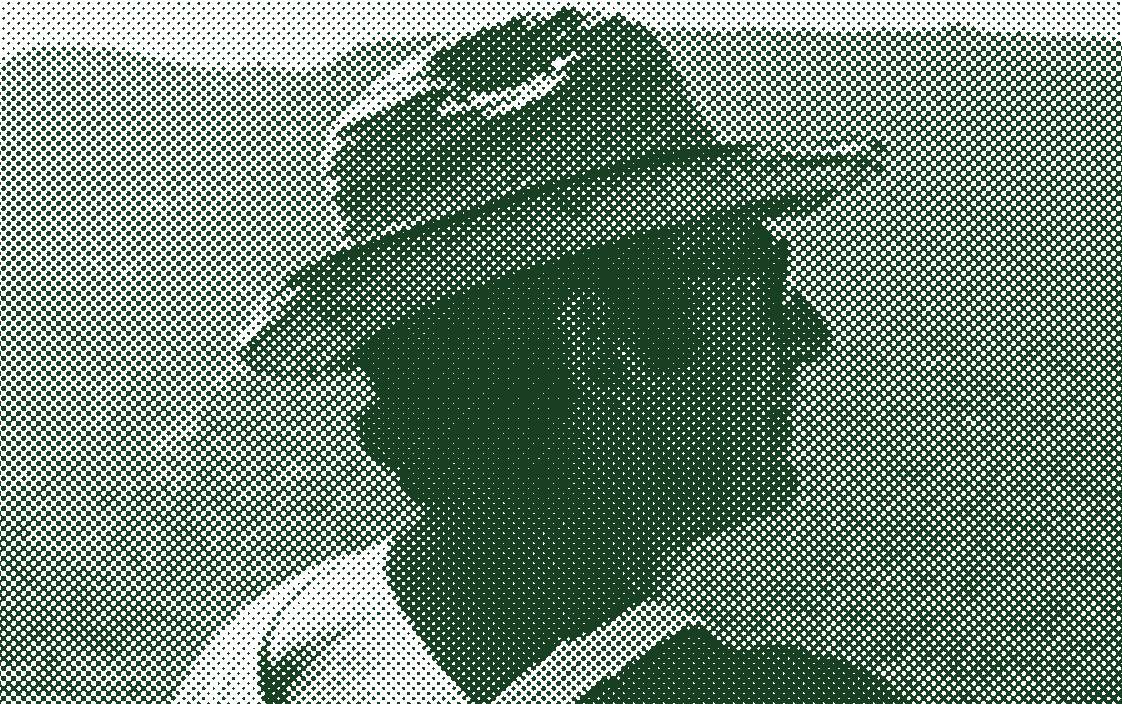
Raymond Mason
Artist and friend
Letter to Françoise Robert on the death of Ipoustéguy
March 2006