
Flavio Arensi, “The Present of Ipoustéguy”
The difficulty of presenting Ipoustéguy (1920–2006) today may stem from the very “crisis” of sculpture itself—if we understand “crisis” in its etymological sense as a decisive turning point, and if we define sculpture as the practice of creating an object to situate it within an environment. The obstacle lies in the complexity of defining certain words and clarifying the gap between their past and present meanings. Nothing is more misleading than using identical words to cover dissimilar notions, especially since sculptural installations increasingly replace the simple occupation of space with active participation, shifting the focus from the object to the place it occupies.
Kurt Schwitters’ (1887–1948) attempt to aggregate matter with space in the Merzbau in Hanover, from the 1920s until the end of the following decade, testifies to the first conceptual urgencies regarding the gradual takeover of space by sculpture. Ipoustéguy also considers this, perhaps in more architectural terms, but without ever truly abandoning the premise of sculpture as an “artisanal” craft—in its authentic sense of creating a work of art. Both Schwitters and the Frenchman consider narrative, or the act of telling, to be primordial. The German dedicated each Merzbau piece to a friend, setting up a secular reliquary as an expression of their relationship; the Frenchman, especially between the Sixties and the Nineties, created a tenacious testimony to specific events.
These are principles that the conceptual system of installation art eludes, both in its precursors of the Seventies and today, by virtue of different premises. Isamu Noguchi’s (1904–1988) educated surface transforms the context into a sculpture of itself; Dan Flavin (1933–1996) asks the space to confer meaning upon the creative idea (which in turn reflects it back); Anish Kapoor’s (1954) At the Edge of the World at Axel Vervoordt’s Kanaal even influences the viewer’s orientation and state of mind.
The words of British artist Tony Cragg firmly highlight an important distinction: “What interests me are the issues I’m trying to develop in my work, not the effect it will have when ‘staged’. I would rather place a work that convinces me in an unsuitable setting than modify the work to make it more suitable for display in a certain setting.” Ultimately, sculpture is independent of space and remains equal to itself even when its surroundings change. Thus, in Michelangelo Pistoletto’s Venere degli stracci (1967), the focal point continues to graze the molding of the Greek goddess, regardless of the context.
The dividing line, therefore, lies in the centrifugal propensity of the installation device, which displaces all that is external to it—or rather, artificially induces the exterior to bend to new functions. Ipoustéguy, conversely, maintains all his significant value within the work, possessing the considerable force of a centripetal tension: each occurrence opens up and resolves itself within the ideal confines of the sculpture. Think of certain compositions, or of Berlin’s enormous 1979 L’homme construit sa ville (Man Builds His City). This work derives from the small 1965 Ecbatane (the city of seven walls, capital of the Median and later Achaemenid empires, conquered by Alexander the Great and represented here as a geometric mass). The concept develops within a narrative path in which forms contain the substance of events, without any need for extraneous appendages: man himself builds his living space, his city, and his history.
It is no coincidence that Mario de Micheli (1914–2004) titled one of the studies in his volume Il disagio della civiltà e le immagini (The Malaise of Civilization and Images) as “Ipoustéguy and the Feeling of History.” In it, he likens the sculptor to Francis Bacon (1909–1992), Alberto Giacometti (1901–1966), and Leonardo Cremonini (1925), noting that they are not only symptomatic of their time but also firm opponents of arbitrariness and aesthetic gratuitousness. They favor human awareness, specifically to ward off the risk of losing one’s identity.
These prerogatives, which might be considered outdated, are in fact highly topical. Yet, through critical superficiality, they run the risk of locking Ipoustéguy into an accessory or retrograde context. This fails to recognize his role as a modernizer capable of transforming the past season into a new era—maintaining a solid link with tradition and renovating it without fleeing from it, and above all, without depersonalization. Admittedly, the public’s untrained taste depends largely on the responsibility of specialists and academic institutions. These bodies rarely venture to interpret art outside the functions of the market and the routine of small schools of thought, preferring the safer territories of approved (and often homogenized) artistic propositions that do not disturb and, crucially, do not invite us to be present in the world.
The opening lines of Luigi Carluccio’s (1911–1981) 1968 essay indicate an interpretative orientation, particularly if we attempt to decipher Ipoustéguy with the quick, distracted eye of today’s reviews: “Here is an artist who takes us at first assault, but he himself is difficult to take.” However, this difficulty in grasping him cannot justify a decades-long distraction on the part of historians, critics, and dealers, all of whom are complicit in an unforgivable blindness.
This exhibition, although it presents only a small part of the master’s vast professional catalog, highlights the two main guidelines that orient his poetics: death and sensuality. These are the impulses that punctuate the psychic and biological character of every being—not within a psychopathological framework, but as an affirmation of life and, more broadly, of reality. This realism should not, however, be confused with a slavish imitation of the model (whether concrete or mental). Rather, it should be seen as the narration of an encounter or an event through a personal filter of experimentation that digests facts (and utopias) in the depths of the viscera: Ipoustéguy’s realism does not copy reality; it dreams it and rethinks it.
Scène comique de la vie moderne (1976) was made two years after the untimely death of Céline, his ten-year-old daughter—news Ipoustéguy learned by telephone while working in the Carrara marble quarries. It is a tragic epiphany, relentlessly sober, unadorned, revealing pain in the very instant of its concrete perception, giving way to mute stupor. The telephone serves as a detonator for the ferocious explosion of the subject’s physical parts; dislocated and torn away in spite of themselves, they are raised above the bony structure that continues to hold a man propelled unexpectedly into the torture of grief (a deflagration even more evident in the small flaying study). Two years after the event, Ipoustéguy re-reads it, re-establishing its particularities with phrasing that goes beyond the factual truth. He uses a surrealism that is not an advertising technique, but metaphysics—the poetic limbo also frequented by his friend Cremonini. It is no coincidence that the master asked Cremonini to paint Céline’s portrait, knowing full well that it could never be a simple “portrait” (Ostacoli, percorsi e riflessi, 1975–1976). This is the elusiveness of Ipoustéguy’s work: his ability to confound the observer, forcing them to participate actively in the sculpture rather than passively endure it, zigzagging between opposing interpretative planes without fixing a single course of action.
We can (paradoxically) understand the confusion of those who commissioned the 1976 monument Death of Bishop Neumann, dedicated to the first canonized American man, and their inexplicable refusal to have it installed (it resides today in the church of Dun-sur-Meuse in France). The withered, mummified bronze body stands out against the white marble amidst the general indifference of the people walking beside it—represented by shoes and ankles, a metaphor for their “living in absence.” Neumann lies dislocated, featuring three mask-faces (one of the sculptor’s recurring themes). These faces correspond to the canon’s different ages or spiritual stages. From atop a white cloud, as if the only true presence capable of dialoguing with the saint, the tutelary smile of the artist’s daughter Céline illuminates the structure. If in Scène comique the artist asserts the harshness of the encounter with death with a punch in the gut—a feverish sign of involvement and awareness—in Mort de l’évêque Neumann, a serenity and unconscious indifference are expressed.
The path that leads Ipoustéguy to these two works, which are in some ways complementary, springs from an erudite literary vision in which poetic vanitas merges with the ingredients of still life. Examples such as the drawing Tête de mort(Death’s Head) from 1941, and the homonymous bronze from 1961, like the other heads and skulls from his early years, become in Roger ou Le peuple des morts (Roger or The People of the Dead, 1959) literary pretexts. With their architectural taste, they represent the great theater of the world and eternal sleep according to the learned canons of European culture, but without any real personal involvement with the human race.
On the contrary, with Mort du père (Death of the Father, 1967–1968), Ipoustéguy seeks a new dialogue with the mystery of life, perhaps more than with that of the end. Originally dedicated to Pope John XXIII (1881–1963), he affixed his father’s funerary mask to the work after receiving news of his death. The “father-pope,” in the center of the scene, surrounded by cardinals wearing tiaras and possessing swollen faces, expresses an incitement to political-social reasoning: the celebration of loss, the closure of one era, and the entry into the next, rendered in the brilliant tones of stone, stainless steel, or patinated bronze.
This theme is heightened and takes on macabre overtones in the paintings of the Death of the Pope series. Here, the father has not replaced the Bishop of Rome; instead, the cadence of the cardinals’ heads beats out the rhythm of a painful procession with strongly expressive features. Distressed faces surround the body, where skeleton and pastoral cross, rib and damask, are entangled in what looks more like a vampiric deposition-exposition of power than a religious vigil. With the breathless white marble of 1971’s Agonie de la mère, and the more synthetic, pungent prototype of Esquisse, Ipoustéguy glides over bodies grazed by illness and fantasy, dressing them in an apparent luxury from which pain, compassion, and the gestures of a shared relationship quickly emerge. The mother’s death seems to be the first ceremony of a reality that has become an intimate motive, a revelation of a personal mirage. In short, it is a death that, especially after Scène comique, is no longer just a collective fantasy, but the autobiography of an affliction.
Despite its angular, slender, and almost irritating character, Petite mort (1997) is a small assemblage—a found object that becomes a support for thoughts and the summary of a life in precarious equilibrium. It remains as the line of a personal poem, a more mature return to vanitas, this time concise and without any search for embellishment: a bucranium (ox skull) is enough to make us grasp the last act of the performance. It is the only real skull among all those reproduced by Ipoustéguy—a kind of natural legacy. But the decisive realization of the inevitability of earthly defeat, the disenchantment of the final departure, along with the vast detours inflicted by the wounds of time and the traces of memory, occurs with 1998’s Age of Conclusions. This is the second vertex of an invented quadrangle in which the ages of questions, verdicts, possibilities, and solutions are examined.
“Animula vagula blandula, little soul, tender and floating soul […], companion of my body which was your host, you are going to descend into these pale, hard and naked places.” This is how Marguerite Yourcenar’s Memoirs of Hadrian begins and concludes. We hear the voice of a tired old man, nevertheless vigilant and attentive, though tormented by the last voyage. In the same way, the weakened man in Ipoustéguy’s dark bronze bends his forehead over his own fragility. It is a collective fragility—perhaps a cold, almost cynical knowledge, or perhaps the consolation of a common destiny shared with the rest of humanity, for which no one can find an escape or remedy. It is a door that must necessarily be crossed, or rather, the passage that takes us out of this dimension.
Homme passant la porte (Man Passing Through the Door, 1966), well known in Italy for having been proposed by galleries in numerous monographic exhibitions between 1968 and 1971, marks this passage by touching on as many meanings as possible. This is undoubtedly the “narrow gate” of the Gospel, but also the continuous initiations to which we are subjected in the course of daily life. Appearing later than La Terre and Homme (1962 and 1963 respectively, both exhibited in a personal room at the XXXII Venice Biennale in 1964), this bronze sums up Ipoustéguy’s anthropological turn and simultaneously redefines his architectural approach. While the power of Auguste Rodin’s Walking Man and the existential tension of Giacometti’s version can certainly be glimpsed, there is a gap regarding sensuality that the Swiss artist never managed to bridge. Compared to Rodin, the nineteenth-century master, we feel the full weight of the present day, as well as the veiled accent of a visionary who transgresses classical rules. He is perhaps closer to the audacity of Emile-Antoine Bourdelle (1861–1929) or the intelligence of Ivan Meštrović (1883–1962).
Petit Val de Grâce (1977), named after the military hospital in Paris, represents the crossing of one of these gates: the man (the soldier) wounded and then healed, still bearing the scars of battle—and again, of history. It possesses an almost sensual beauty, but it is not cruel, unlike certain liquefactions by Augusto Perez (1929–2000), specifically his hermaphrodites. It is a sensuality that is eros—the search for completeness, the sensation of belonging to one another and thus overcoming solitude.
Sometimes, by chance or luck, artists separated by great physical and temporal distances meet in the vivid experience of language. It is astonishing that, without any direct confrontation, the amorous bodies of Maison intermingle with the verses of Patrizia Valduga’s quatrains, distilling moments of happiness, merging without the slightest distinction of sex into a single biological and organic concept of belonging to a common home: “For me in me beyond the spirit / her body on me like a cloak / but beyond the body in me furiously / in me outside me beyond the beyond.”
Ipoustéguy’s eroticism is indeed a hymn to life—ironic, irreverent towards bigotry, and amused, but above all respectful of existence, as is all his work. Even when it is very explicit (as in Cherche cramouille, 1972), he tries to go beyond the initial perceptive aspect to transform the smallest and simplest acts, such as shaking hands or dancing (Danseuse, 1991), into biographical suggestions. While the theme of death comes to an end with Âge des conclusions, like spoiled fruit before falling from the branch, Ipoustéguy’s love, in all its variations, seems like a flower that opens up as time goes by.
It is not hard to see it blooming for the first time in the geometrical figures of the 1950s, with blocks reminiscent of German Bauhaus innovations. If we look for more distant influences, we see pre-Columbian monuments, great Olmec heads, and gigantic Celtic stones with their archetypal character. Bloc (1959) is a clear opening of volumes that compose a chord of forms, confronting a modality similar to certain research by Giuliano Vangi (1931), an artist who undoubtedly felt the attraction of the Frenchman’s work.
With the evolution of his identity, Ipoustéguy adds the flavor of the human body to the schematic form. The figure becomes more sinuous; curves take over, recalling and somehow denying the abstract polishing of Constantin Brancusi (1876–1957)—Ipoustéguy declared that he broke Brancusi’s “egg”—and welcoming the figures of Henry Moore (1898–1986), such as Helmet from 1939–1940 (consider Le fond du rire from 1966). All these ingredients gave his sculpture an even greater sensuality. From 1967 onwards, with the collaboration of the Nicoli workshop in Carrara, he mastered a seductive surface, to which he added the “bilingualism” of marble and metal over time.
The supple lightness of Alvéole synthesizes the intent of an erotic grammar of the tactile, where voids and solids follow one another to recreate the idea of sexual union. It achieves an eloquent elegance that few other non-figurative contemporary artists have reached, with the possible exception of Eduardo Chillida (1924–2002) and Giò Pomodoro (1930–2002). Eros finally becomes surface, the pleasure of feeling the statue’s skin slide under the palm of the hand, playing with different materials in a continual search for new codes.
During his long stays in Carrara, many of the master’s most interesting works, such as La naissance and Les plongeuses(both 1968), take on the double garb of casting and stone carving, with intentionally dissimilar results despite originating from the same matrix. The lines that run through the marble like fleeing tongues find bolder reflections in bronze. The second version of Birth, in particular, forgoes the sharpness of the original marble in favor of a shiny, precious patina. The event focuses on the detail of childbirth, without showing anything else; two hands are already at work in the mother’s bosom, embracing the unborn child. This is not the first sculpture in which touching or being touched becomes an imperative necessity for the material, which bows to this constraint and calls on the viewer to do the same. Here, however, the gentleness of the event contrasts with the cuts and perspectives.
Ipoustéguy never sidesteps the obstacle. He takes reality head-on, exalting this confrontation and revealing all the eventualities that can be the lot of everyone, sometimes at the risk of irritating. Sex, birth, and death are the letters of an alphabet that marks the maturation of the living being. He works without false modesty, accentuating the ferocity of certain behaviors while smiling at the ambiguity of nature and forms (The Chalice). Everything trickles down indiscriminately, arising and being consumed in the lasting flow of a truth that is renewed from generation to generation.
There is never a break between one subject and the next; everything is accomplished as if in the recitation of a long mythological hymn. The wheel of existence turns inexorably, and creation itself half-opens the valves of its secrets for those willing to listen to its mysteries. We are all at once fruit, animal, mother, father, child, vagina, breast moist with pleasure, and erect phallus; a single substance split between self and other before reuniting, like the lover with the double figure of Maison, with one face turned towards the beloved and the other enjoying his intimate pleasure. Ipoustéguy does not shy away from describing every moment of life. From conception (Lune de miel) to childbirth, to the agony of the dying, every moment is sacred and deserves a look.
If we analyze the entire catalog of his works, the circular nature of the sculptural motifs becomes evident: they follow a spiral development over the years, repeating and brightening from one to the next. A repetitiveness that is the measure of our earthly experience, as Louise Labé (1524–1566), the French poet to whom the sculptor dedicated a public monument in Lyon, wrote:
I live, I die; I burn and drown; I am extremely hot while enduring coldness; Life is too soft and too hard. I have great troubles intermingled with joy. Suddenly I laugh and cry, And in pleasure many a grievance I endure; My good is gone, and for ever it lasts; All at once I dry up and turn green. Thus Love inconstantly leads me; And when I think I have more pain, Without a thought I find myself out of sorrow. Then when I believe my joy to be certain, And be at the top of my desired heur, He puts me back in my first misfortune.
The incredible privilege of presenting Jean Robert—Ipoustéguy by his artist’s name—today lies in the possibility of completing an uninterrupted journey through the long tradition of Western sculpture. It enables us to rediscover certain parameters and achievements of the old masters, right up to the most recent avant-gardes.
As is often the case with the great masters, this intense, ingenious artist, capable of inspiring and sustaining the efforts of many colleagues, rejects the usual terminology of critics. He escapes labels and considers that, for him, “to make” is equivalent to a constant commitment to the service of sculpture, to which he entrusts the task of communicating. But above all, he grants man a moment of attention, a moment of emotion.
Kurt Schwitters’ (1887–1948) attempt to aggregate matter with space in the Merzbau in Hanover, from the 1920s until the end of the following decade, testifies to the first conceptual urgencies regarding the gradual takeover of space by sculpture. Ipoustéguy also considers this, perhaps in more architectural terms, but without ever truly abandoning the premise of sculpture as an “artisanal” craft—in its authentic sense of creating a work of art. Both Schwitters and the Frenchman consider narrative, or the act of telling, to be primordial. The German dedicated each Merzbau piece to a friend, setting up a secular reliquary as an expression of their relationship; the Frenchman, especially between the Sixties and the Nineties, created a tenacious testimony to specific events.
These are principles that the conceptual system of installation art eludes, both in its precursors of the Seventies and today, by virtue of different premises. Isamu Noguchi’s (1904–1988) educated surface transforms the context into a sculpture of itself; Dan Flavin (1933–1996) asks the space to confer meaning upon the creative idea (which in turn reflects it back); Anish Kapoor’s (1954) At the Edge of the World at Axel Vervoordt’s Kanaal even influences the viewer’s orientation and state of mind.
The words of British artist Tony Cragg firmly highlight an important distinction: “What interests me are the issues I’m trying to develop in my work, not the effect it will have when ‘staged’. I would rather place a work that convinces me in an unsuitable setting than modify the work to make it more suitable for display in a certain setting.” Ultimately, sculpture is independent of space and remains equal to itself even when its surroundings change. Thus, in Michelangelo Pistoletto’s Venere degli stracci (1967), the focal point continues to graze the molding of the Greek goddess, regardless of the context.
The dividing line, therefore, lies in the centrifugal propensity of the installation device, which displaces all that is external to it—or rather, artificially induces the exterior to bend to new functions. Ipoustéguy, conversely, maintains all his significant value within the work, possessing the considerable force of a centripetal tension: each occurrence opens up and resolves itself within the ideal confines of the sculpture. Think of certain compositions, or of Berlin’s enormous 1979 L’homme construit sa ville (Man Builds His City). This work derives from the small 1965 Ecbatane (the city of seven walls, capital of the Median and later Achaemenid empires, conquered by Alexander the Great and represented here as a geometric mass). The concept develops within a narrative path in which forms contain the substance of events, without any need for extraneous appendages: man himself builds his living space, his city, and his history.
It is no coincidence that Mario de Micheli (1914–2004) titled one of the studies in his volume Il disagio della civiltà e le immagini (The Malaise of Civilization and Images) as “Ipoustéguy and the Feeling of History.” In it, he likens the sculptor to Francis Bacon (1909–1992), Alberto Giacometti (1901–1966), and Leonardo Cremonini (1925), noting that they are not only symptomatic of their time but also firm opponents of arbitrariness and aesthetic gratuitousness. They favor human awareness, specifically to ward off the risk of losing one’s identity.
These prerogatives, which might be considered outdated, are in fact highly topical. Yet, through critical superficiality, they run the risk of locking Ipoustéguy into an accessory or retrograde context. This fails to recognize his role as a modernizer capable of transforming the past season into a new era—maintaining a solid link with tradition and renovating it without fleeing from it, and above all, without depersonalization. Admittedly, the public’s untrained taste depends largely on the responsibility of specialists and academic institutions. These bodies rarely venture to interpret art outside the functions of the market and the routine of small schools of thought, preferring the safer territories of approved (and often homogenized) artistic propositions that do not disturb and, crucially, do not invite us to be present in the world.
The opening lines of Luigi Carluccio’s (1911–1981) 1968 essay indicate an interpretative orientation, particularly if we attempt to decipher Ipoustéguy with the quick, distracted eye of today’s reviews: “Here is an artist who takes us at first assault, but he himself is difficult to take.” However, this difficulty in grasping him cannot justify a decades-long distraction on the part of historians, critics, and dealers, all of whom are complicit in an unforgivable blindness.
This exhibition, although it presents only a small part of the master’s vast professional catalog, highlights the two main guidelines that orient his poetics: death and sensuality. These are the impulses that punctuate the psychic and biological character of every being—not within a psychopathological framework, but as an affirmation of life and, more broadly, of reality. This realism should not, however, be confused with a slavish imitation of the model (whether concrete or mental). Rather, it should be seen as the narration of an encounter or an event through a personal filter of experimentation that digests facts (and utopias) in the depths of the viscera: Ipoustéguy’s realism does not copy reality; it dreams it and rethinks it.
Scène comique de la vie moderne (1976) was made two years after the untimely death of Céline, his ten-year-old daughter—news Ipoustéguy learned by telephone while working in the Carrara marble quarries. It is a tragic epiphany, relentlessly sober, unadorned, revealing pain in the very instant of its concrete perception, giving way to mute stupor. The telephone serves as a detonator for the ferocious explosion of the subject’s physical parts; dislocated and torn away in spite of themselves, they are raised above the bony structure that continues to hold a man propelled unexpectedly into the torture of grief (a deflagration even more evident in the small flaying study). Two years after the event, Ipoustéguy re-reads it, re-establishing its particularities with phrasing that goes beyond the factual truth. He uses a surrealism that is not an advertising technique, but metaphysics—the poetic limbo also frequented by his friend Cremonini. It is no coincidence that the master asked Cremonini to paint Céline’s portrait, knowing full well that it could never be a simple “portrait” (Ostacoli, percorsi e riflessi, 1975–1976). This is the elusiveness of Ipoustéguy’s work: his ability to confound the observer, forcing them to participate actively in the sculpture rather than passively endure it, zigzagging between opposing interpretative planes without fixing a single course of action.
We can (paradoxically) understand the confusion of those who commissioned the 1976 monument Death of Bishop Neumann, dedicated to the first canonized American man, and their inexplicable refusal to have it installed (it resides today in the church of Dun-sur-Meuse in France). The withered, mummified bronze body stands out against the white marble amidst the general indifference of the people walking beside it—represented by shoes and ankles, a metaphor for their “living in absence.” Neumann lies dislocated, featuring three mask-faces (one of the sculptor’s recurring themes). These faces correspond to the canon’s different ages or spiritual stages. From atop a white cloud, as if the only true presence capable of dialoguing with the saint, the tutelary smile of the artist’s daughter Céline illuminates the structure. If in Scène comique the artist asserts the harshness of the encounter with death with a punch in the gut—a feverish sign of involvement and awareness—in Mort de l’évêque Neumann, a serenity and unconscious indifference are expressed.
The path that leads Ipoustéguy to these two works, which are in some ways complementary, springs from an erudite literary vision in which poetic vanitas merges with the ingredients of still life. Examples such as the drawing Tête de mort(Death’s Head) from 1941, and the homonymous bronze from 1961, like the other heads and skulls from his early years, become in Roger ou Le peuple des morts (Roger or The People of the Dead, 1959) literary pretexts. With their architectural taste, they represent the great theater of the world and eternal sleep according to the learned canons of European culture, but without any real personal involvement with the human race.
On the contrary, with Mort du père (Death of the Father, 1967–1968), Ipoustéguy seeks a new dialogue with the mystery of life, perhaps more than with that of the end. Originally dedicated to Pope John XXIII (1881–1963), he affixed his father’s funerary mask to the work after receiving news of his death. The “father-pope,” in the center of the scene, surrounded by cardinals wearing tiaras and possessing swollen faces, expresses an incitement to political-social reasoning: the celebration of loss, the closure of one era, and the entry into the next, rendered in the brilliant tones of stone, stainless steel, or patinated bronze.
This theme is heightened and takes on macabre overtones in the paintings of the Death of the Pope series. Here, the father has not replaced the Bishop of Rome; instead, the cadence of the cardinals’ heads beats out the rhythm of a painful procession with strongly expressive features. Distressed faces surround the body, where skeleton and pastoral cross, rib and damask, are entangled in what looks more like a vampiric deposition-exposition of power than a religious vigil. With the breathless white marble of 1971’s Agonie de la mère, and the more synthetic, pungent prototype of Esquisse, Ipoustéguy glides over bodies grazed by illness and fantasy, dressing them in an apparent luxury from which pain, compassion, and the gestures of a shared relationship quickly emerge. The mother’s death seems to be the first ceremony of a reality that has become an intimate motive, a revelation of a personal mirage. In short, it is a death that, especially after Scène comique, is no longer just a collective fantasy, but the autobiography of an affliction.
Despite its angular, slender, and almost irritating character, Petite mort (1997) is a small assemblage—a found object that becomes a support for thoughts and the summary of a life in precarious equilibrium. It remains as the line of a personal poem, a more mature return to vanitas, this time concise and without any search for embellishment: a bucranium (ox skull) is enough to make us grasp the last act of the performance. It is the only real skull among all those reproduced by Ipoustéguy—a kind of natural legacy. But the decisive realization of the inevitability of earthly defeat, the disenchantment of the final departure, along with the vast detours inflicted by the wounds of time and the traces of memory, occurs with 1998’s Age of Conclusions. This is the second vertex of an invented quadrangle in which the ages of questions, verdicts, possibilities, and solutions are examined.
“Animula vagula blandula, little soul, tender and floating soul […], companion of my body which was your host, you are going to descend into these pale, hard and naked places.” This is how Marguerite Yourcenar’s Memoirs of Hadrian begins and concludes. We hear the voice of a tired old man, nevertheless vigilant and attentive, though tormented by the last voyage. In the same way, the weakened man in Ipoustéguy’s dark bronze bends his forehead over his own fragility. It is a collective fragility—perhaps a cold, almost cynical knowledge, or perhaps the consolation of a common destiny shared with the rest of humanity, for which no one can find an escape or remedy. It is a door that must necessarily be crossed, or rather, the passage that takes us out of this dimension.
Homme passant la porte (Man Passing Through the Door, 1966), well known in Italy for having been proposed by galleries in numerous monographic exhibitions between 1968 and 1971, marks this passage by touching on as many meanings as possible. This is undoubtedly the “narrow gate” of the Gospel, but also the continuous initiations to which we are subjected in the course of daily life. Appearing later than La Terre and Homme (1962 and 1963 respectively, both exhibited in a personal room at the XXXII Venice Biennale in 1964), this bronze sums up Ipoustéguy’s anthropological turn and simultaneously redefines his architectural approach. While the power of Auguste Rodin’s Walking Man and the existential tension of Giacometti’s version can certainly be glimpsed, there is a gap regarding sensuality that the Swiss artist never managed to bridge. Compared to Rodin, the nineteenth-century master, we feel the full weight of the present day, as well as the veiled accent of a visionary who transgresses classical rules. He is perhaps closer to the audacity of Emile-Antoine Bourdelle (1861–1929) or the intelligence of Ivan Meštrović (1883–1962).
Petit Val de Grâce (1977), named after the military hospital in Paris, represents the crossing of one of these gates: the man (the soldier) wounded and then healed, still bearing the scars of battle—and again, of history. It possesses an almost sensual beauty, but it is not cruel, unlike certain liquefactions by Augusto Perez (1929–2000), specifically his hermaphrodites. It is a sensuality that is eros—the search for completeness, the sensation of belonging to one another and thus overcoming solitude.
Sometimes, by chance or luck, artists separated by great physical and temporal distances meet in the vivid experience of language. It is astonishing that, without any direct confrontation, the amorous bodies of Maison intermingle with the verses of Patrizia Valduga’s quatrains, distilling moments of happiness, merging without the slightest distinction of sex into a single biological and organic concept of belonging to a common home: “For me in me beyond the spirit / her body on me like a cloak / but beyond the body in me furiously / in me outside me beyond the beyond.”
Ipoustéguy’s eroticism is indeed a hymn to life—ironic, irreverent towards bigotry, and amused, but above all respectful of existence, as is all his work. Even when it is very explicit (as in Cherche cramouille, 1972), he tries to go beyond the initial perceptive aspect to transform the smallest and simplest acts, such as shaking hands or dancing (Danseuse, 1991), into biographical suggestions. While the theme of death comes to an end with Âge des conclusions, like spoiled fruit before falling from the branch, Ipoustéguy’s love, in all its variations, seems like a flower that opens up as time goes by.
It is not hard to see it blooming for the first time in the geometrical figures of the 1950s, with blocks reminiscent of German Bauhaus innovations. If we look for more distant influences, we see pre-Columbian monuments, great Olmec heads, and gigantic Celtic stones with their archetypal character. Bloc (1959) is a clear opening of volumes that compose a chord of forms, confronting a modality similar to certain research by Giuliano Vangi (1931), an artist who undoubtedly felt the attraction of the Frenchman’s work.
With the evolution of his identity, Ipoustéguy adds the flavor of the human body to the schematic form. The figure becomes more sinuous; curves take over, recalling and somehow denying the abstract polishing of Constantin Brancusi (1876–1957)—Ipoustéguy declared that he broke Brancusi’s “egg”—and welcoming the figures of Henry Moore (1898–1986), such as Helmet from 1939–1940 (consider Le fond du rire from 1966). All these ingredients gave his sculpture an even greater sensuality. From 1967 onwards, with the collaboration of the Nicoli workshop in Carrara, he mastered a seductive surface, to which he added the “bilingualism” of marble and metal over time.
The supple lightness of Alvéole synthesizes the intent of an erotic grammar of the tactile, where voids and solids follow one another to recreate the idea of sexual union. It achieves an eloquent elegance that few other non-figurative contemporary artists have reached, with the possible exception of Eduardo Chillida (1924–2002) and Giò Pomodoro (1930–2002). Eros finally becomes surface, the pleasure of feeling the statue’s skin slide under the palm of the hand, playing with different materials in a continual search for new codes.
During his long stays in Carrara, many of the master’s most interesting works, such as La naissance and Les plongeuses(both 1968), take on the double garb of casting and stone carving, with intentionally dissimilar results despite originating from the same matrix. The lines that run through the marble like fleeing tongues find bolder reflections in bronze. The second version of Birth, in particular, forgoes the sharpness of the original marble in favor of a shiny, precious patina. The event focuses on the detail of childbirth, without showing anything else; two hands are already at work in the mother’s bosom, embracing the unborn child. This is not the first sculpture in which touching or being touched becomes an imperative necessity for the material, which bows to this constraint and calls on the viewer to do the same. Here, however, the gentleness of the event contrasts with the cuts and perspectives.
Ipoustéguy never sidesteps the obstacle. He takes reality head-on, exalting this confrontation and revealing all the eventualities that can be the lot of everyone, sometimes at the risk of irritating. Sex, birth, and death are the letters of an alphabet that marks the maturation of the living being. He works without false modesty, accentuating the ferocity of certain behaviors while smiling at the ambiguity of nature and forms (The Chalice). Everything trickles down indiscriminately, arising and being consumed in the lasting flow of a truth that is renewed from generation to generation.
There is never a break between one subject and the next; everything is accomplished as if in the recitation of a long mythological hymn. The wheel of existence turns inexorably, and creation itself half-opens the valves of its secrets for those willing to listen to its mysteries. We are all at once fruit, animal, mother, father, child, vagina, breast moist with pleasure, and erect phallus; a single substance split between self and other before reuniting, like the lover with the double figure of Maison, with one face turned towards the beloved and the other enjoying his intimate pleasure. Ipoustéguy does not shy away from describing every moment of life. From conception (Lune de miel) to childbirth, to the agony of the dying, every moment is sacred and deserves a look.
If we analyze the entire catalog of his works, the circular nature of the sculptural motifs becomes evident: they follow a spiral development over the years, repeating and brightening from one to the next. A repetitiveness that is the measure of our earthly experience, as Louise Labé (1524–1566), the French poet to whom the sculptor dedicated a public monument in Lyon, wrote:
I live, I die; I burn and drown; I am extremely hot while enduring coldness; Life is too soft and too hard. I have great troubles intermingled with joy. Suddenly I laugh and cry, And in pleasure many a grievance I endure; My good is gone, and for ever it lasts; All at once I dry up and turn green. Thus Love inconstantly leads me; And when I think I have more pain, Without a thought I find myself out of sorrow. Then when I believe my joy to be certain, And be at the top of my desired heur, He puts me back in my first misfortune.
The incredible privilege of presenting Jean Robert—Ipoustéguy by his artist’s name—today lies in the possibility of completing an uninterrupted journey through the long tradition of Western sculpture. It enables us to rediscover certain parameters and achievements of the old masters, right up to the most recent avant-gardes.
As is often the case with the great masters, this intense, ingenious artist, capable of inspiring and sustaining the efforts of many colleagues, rejects the usual terminology of critics. He escapes labels and considers that, for him, “to make” is equivalent to a constant commitment to the service of sculpture, to which he entrusts the task of communicating. But above all, he grants man a moment of attention, a moment of emotion.
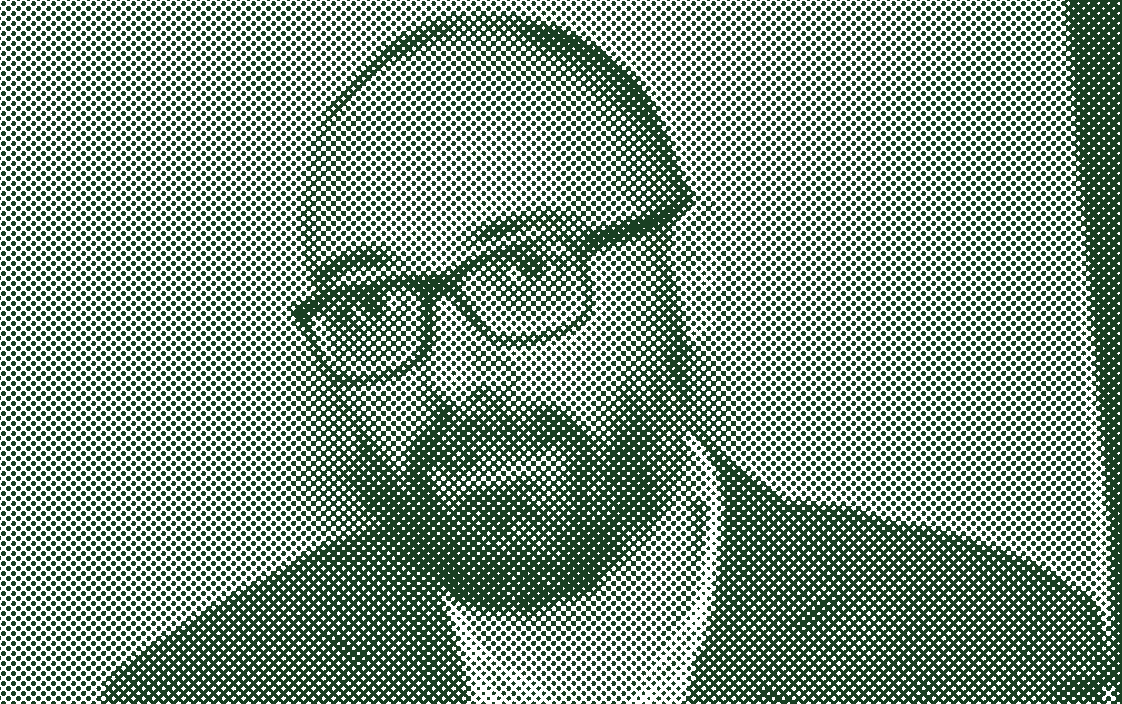
Flavio Arensi,
Director of the Museums of Legnano, Lombardy, Italy
Excerpt from Ipoustéguy, Eros + Thanatos, Milan, Allemandi & C., 2008