
Pierre Gaudibert, “Sequence Shot”
In 1978, the year of Ipoustéguy’s fifty-eighth birthday and his major (provisional) retrospective in Paris, what constitutes his intimately linked human and artistic personality? Let us draw on all possible approaches—written or oral—from the intermittent but decisive exchanges with him since the 1960s.
This very strong personality—well-structured despite anguish and emotional fragility—is a blend of restrained passion and reserved demeanor, a cocktail of fierce toughness and generous tenderness, a symphony of precision, humor, and simplicity. He knows he is shy, but he is just as he is: unconcerned about pleasing or displeasing, keeping his outspokenness and his frank demeanor, mastering his withdrawals as well as his “sorties.” He withdraws to preserve his inner self, his “inviolable entity,” to protect himself; he thus masks his secret core of pride (“the proud red blood of the modest”). He says of himself: “I’m willing to be discreet, but I’m not modest,” and he succeeds perfectly…
He is a man of solitude yet connected to others through his body, the laws of the species, myths, and a thousand other subtle channels. A man of extreme concentration in assiduous work, yet a man of communication—including the very special medium of the telephone, which he controls entirely, since nobody knows his number and he takes the initiative to call whenever he wants! Finally, he is a man of “intimate din,” harboring an anger and violence within him to which sculpture serves as an outlet—now perhaps tempered by a serenity born of the enjoyment of nature. He says: “Genius is patient anger,” and this applies well to him.
As is often the case with sculptors, Ipoustéguy presents himself first and foremost as a manual worker, a homo faber, not a chatterbox. He hates glibness, blabber, verbiage, bistro palaver, ideological jousting, Parisian dinners, and the thousand and one mundanities, preferring to stay away from saying and devote himself body and soul to doing. And yet, when questioned, he is always ready to talk, interested as he is in words, in working with words, in the puns in the titles of his works and in his texts—in short, in writing. Fully aware of what matters most to him, he seeks to make the most of his “gift,” applying craftsmanship to express himself through sculpture and graphic art.
Apart from this “gift,” he sees himself as similar to all other men, caught between the first cry of birth and the last rattle of death—“the commonplaces of the species.” His subjectivity is “intractable,” even aggressive, and in any case predatory because it is singular, irreplaceable, and different—like that of each and every one of us: egoistic, egotistic, egocentric, declining the “I” in all registers. This in no way prevents him from retaining full confidence in the virtues of fraternity and solidarity that animate the world of workers—all those who use their hands, now dispossessed by piecemeal or automated tasks, who have become a proletariat separated as much from the craftsman as from the artist (whose approach they often fail to understand, however fraternal it may be). He respects work that is handmade and well done, work that “honors” the other, whoever they may be, and he delivers the most perfect, rigorous, and “sumptuous” work he can.
A “worker from the suburbs,” a “guy from the street,” he always feels deeply close to his working-class origins and his friends of yesteryear, ready to fight like them for his dignity as a man and creator. When it is at stake, he faces up to it and never gives up. True to the message of Leonardo da Vinci or Robert Lebel’s La fin de l’humilité: no servility in defeats or honors, in dealings with merchants, clients, or sponsors.
He has the feeling of belonging to a social class that is still alive, of being an integral part of the people. By training and nature, he remains a stranger to intellectualism—especially that of academia—far removed from the world of endless talk and theorizing, even if he sometimes appreciates a certain pleasant “froth” that emanates from it. He puts it well: “Spirituality is your ultimate bodily limit, but certainly not intellectualism, which turns out to be quite remote outside the flesh.” A sculptor cannot accept the dualistic separation between body and mind. The soul is then the true intelligence, the one that includes emotion, intuition, and “visions”—non-rational approaches.
Ipoustéguy declares himself to be a “conservative,” concerned first and foremost with the preservation of his self and his body, with all the demands born of strict fidelity to the realization of his sculptures and the management of his affairs. A preservation that can be tantamount to embalming—close to statuary art itself! But his heart remains libertarian, distrustful of powers, the state, the army, the police, the churches, all social hierarchies. He is a kind of anarchizing individualist, a resolute anti-fascist, and in any case an unbonded, free person. “Now that fascism has learned its lesson, it fights without a face. It surrounds us. A fascist is one who conditions man from without, whatever assails him and presses him into immediate obedience to no longer choose.” (Leaders et enfants nus)
He likes to bring the powerful—whoever they may be—down to their own measure, as well as that of the human condition, relativizing them while assuming them, without denying old beliefs. He is currently awaiting the return of a Stalin, “the Louis XI of the working class,” smoothing his mustache, in a work entitled Le Vieux Printemps (The Old Spring). Didn’t he paint a Mao pissing and swimming in the Yellow River?
Ipoustéguy remains marginal, apart and on the side, even if he feels a brief guilt at not being “in the loop.” He hates the noisy life of groups, gatherings of all kinds, refusing to live “agglutinated.” He finds or rediscovers joy in the solitude of his studio, at work, in “his juice,” and doesn’t like to go out or travel. He owes his equilibrium first and foremost to his ceaseless sculpting and the presence of his garden. He keeps a close eye on his body, the primary source of all his sculptural activity, because his good physical condition is essential to his increasingly mastered gestures.
His “inner orb” is connected with every fiber of his being to the present time—“I receive the onslaught of events”—without any nostalgia for past eras, “forward” with a wave of utopia, however, concerning man’s future. He doesn’t want to destroy or tear down; he refuses to “make a fate of all the pieces” like Picasso (whom he admires and knows well), or to deny art in the manner of Dada or Marcel Duchamp. He wants to stand up, to build again, to be as positive as possible, with passion and lucidity.
His materialism is broad, open, tolerant of spiritualities concerned with the soul—a concern that is also his own. He is in search of the unity of a disjointed man and his rediscovered harmony with the cosmos. He sees God enclosed in the monuments of Egypt, or as a pebble—an important object for the sculptor, but also disconcerting because there is always something underneath when you lift it… Ipoustéguy’s upbringing was religious; a former choirboy, he became interested in sacred texts without understanding the rituals of the Mass or liturgical feasts, and then lost his faith. But he knows “a kind of mysticism in myths used with passion.”
One day in Venice, in the late spring of 1971, sitting on the terrace of a piazza café, waiting for a cappuccino, he felt a “beatitude,” a cosmic ecstasy, an unspeakable happiness whose presence continued to carry him through his existence. It was a very brief moment of marvelous, total accord with himself and with the world—a lifting of anguish and inner division, of separation from the Whole. Ipoustéguy would try to suggest an equivalence to translate the untranslatable: “As if all the swirling molecules that form me lined up in a single line impeccably to infinity.” Rilke would have detected an ecstatic experience of the “Open.”
As painters paint icons, he sculpts idols—“petrified flags” to use his strong expression. Making himself “the reporter of man in his environment,” he embodies discourses, petrifies stories, narratives, anecdotes—everything that some, claiming Maurice Denis’s famous little phrase, want to forbid contemporary creators from doing, dragging art towards nothingness or decor. For him, anecdotes don’t bother him at all; quite the contrary. Becoming decorative, lapsing into formalism—that represents everything he hates most about art.
Death—his own death—no longer occupies him as it did in his youth, when he talked about it and played it out with friends in the confident ignorance of childhood. He has encountered the terrible deaths of those close to him, which he has inscribed forever in his sculptures. Today, “she looks after me more and more, so I don’t have to look after her.” One day there will be a “personal absence,” when the body is at the end of its rope, ready to become a corpse, a carcass, a skeleton, dust or ashes, but also atoms returning to the dance of the universe:
They melted into a thick absence
Red clay has drunk the white species
The gift of life has passed into flowers
(Paul Valéry)
Everything in one’s power is designed to ensure that this death comes as late as possible. Then it will be time to pass on, to “pass on his tools.” His work alone will remain, marking the future, inscribing itself in the history of art. He knows it, and so do we.
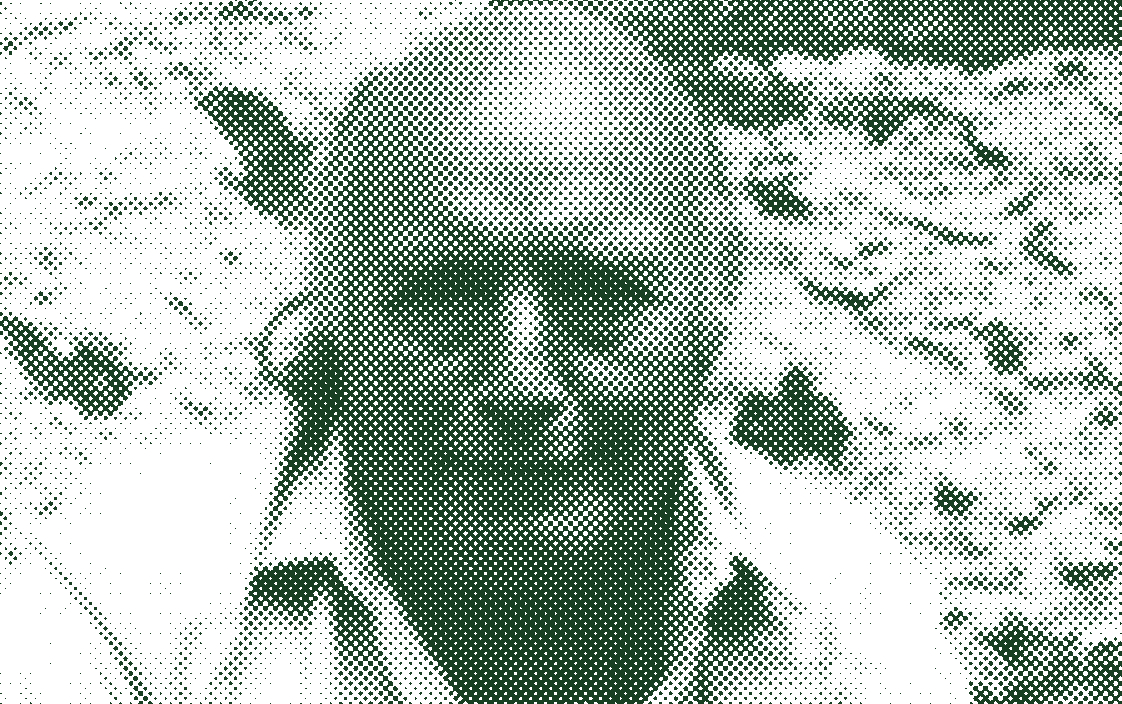
Pierre Gaudibert
Excerpt from Ipoustéguy, Cercle d’art, 1989